ToC
Is Generic Upadacitinib as Effective as Rinvoq? What the Research Says
If you’re asking is generic upadacitinib as effective as Rinvoq, you’re not alone. Many patients who are prescribed upadacitinib want to understand what changes, what stays the same, and what the evidence actually says before switching from a brand-name medicine to a generic.
This article explains how generics are evaluated, what upadacitinib bioequivalence really means, and how to think about generic upadacitinib vs Rinvoq using reliable, research-backed standards. And yes, we will return to the core question, is generic upadacitinib as effective as Rinvoq, throughout, because the details matter.
What makes a medicine “generic”?
A “generic” medicine is generally intended to be a lower-cost version of a brand-name drug that matches the reference product in key ways. In the U.S., the FDA’s standard expectation for an approved generic includes the same active ingredient, strength, dosage form, and route of administration as the brand-name reference drug, along with demonstrated bioequivalence. The FDA also requires appropriate manufacturing quality standards.
Source: FDA guidance and consumer education on generic drugs and bioequivalence requirements (FDA).
In everyday terms, the generic is designed to deliver the same medication to the body in the same way, even though some inactive ingredients (like fillers or coatings) can differ. This is one reason people compare a generic vs brand JAK inhibitor and wonder if they will “feel” identical.
So when people ask is generic upadacitinib as effective as Rinvoq, what they are often really asking is whether a product has the same upadacitinib active ingredient, and whether it performs similarly in the body under accepted bioequivalence standards.
Rinvoq and Upanib share upadacitinib citrate
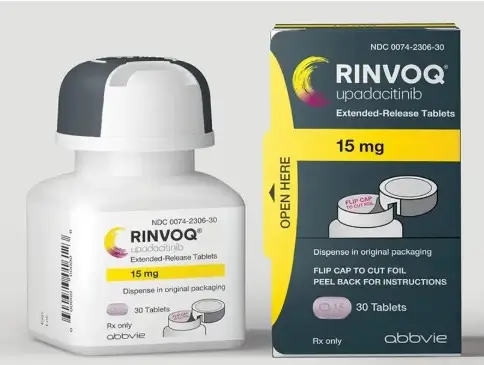
RINVOQ is a brand-name medicine that contains upadacitinib (as upadacitinib extended-release tablets, with upadacitinib commonly present as a salt form such as citrate depending on product formulation details listed by the manufacturer and regulator). The key point for most patients is that the therapeutic component is upadacitinib active ingredient.
Source: AbbVie RINVOQ U.S. Prescribing Information (PI).
On first use: Upanib (Upadacitinib) is positioned as a product that also uses upadacitinib citrate as its drug substance. If you are comparing generic upadacitinib vs Rinvoq, this shared active ingredient is the starting point, but it is not the whole story. The next piece is how regulators define “equivalence.”
This brings us back to the key question: is generic upadacitinib as effective as Rinvoq? The most evidence-based way to approach that question is to understand bioequivalence standards and what they can and cannot prove.
What “bioequivalence” means (and what it does not)
Upadacitinib bioequivalence refers to comparative testing that checks whether two products deliver upadacitinib into the bloodstream at a similar rate and to a similar extent. Regulators like the FDA describe bioequivalence as the absence of a significant difference in the rate and extent to which the active ingredient becomes available at the site of action, when given at the same molar dose under similar conditions.
Source: FDA bioequivalence explanations and standards.
This is the core scientific framework behind why patients ask does generic Rinvoq work and why clinicians discuss generic vs brand JAK inhibitor choices in practical terms.
At the same time, it’s important to be precise. Bioequivalence is not the same thing as running brand-new, large-scale clinical trials for every generic in every disease. Bioequivalence supports the expectation of similar clinical performance when the active ingredient, dose, and exposure are comparable, but you should avoid assuming that any specific product is bioequivalent unless it has been evaluated and approved under the relevant regulator’s pathway. That’s why an evidence-based answer to is generic upadacitinib as effective as Rinvoq should be framed around regulatory standards and verified approvals, not assumptions.
To connect the dots: in regulated settings, if a generic product is approved as bioequivalent to RINVOQ (or another reference upadacitinib product), it is generally expected to perform similarly based on FDA-described principles.
What the research says about Upadacitinib
Upadacitinib is a selective Janus kinase (JAK) inhibitor. Its efficacy and safety have been evaluated in multiple clinical trials across immune-mediated inflammatory diseases, and the brand product’s labeling summarizes these data for approved indications. While these studies primarily support the brand’s approvals, they also establish a deep evidence base about the molecule itself, which is why patients researching is generic upadacitinib as effective as Rinvoq often start by reading RINVOQ prescribing information and peer-reviewed trial publications.
This is also the right place to emphasize something practical: regardless of brand or generic status, upadacitinib has known class and product-specific risks that are described in approved labeling, and decisions should be individualized with your clinician.
Quality and manufacturing: Why cGMP matters
When comparing generic upadacitinib vs Rinvoq, patients often focus on the tablet itself, but manufacturing oversight is a major part of quality. Current Good Manufacturing Practice (cGMP) is the quality standard used to help ensure medicines are consistently produced and controlled according to quality standards.
Ziska Pharmaceuticals Ltd. highlights its compliance with cGMP and its experience as a manufacturer. This matters because strong manufacturing systems reduce the risk of quality variations and help ensure consistent dosage and performance from batch to batch. The best way to evaluate any manufacturer’s claims is to review their published credentials, quality statements, and any available regulatory or audit information they provide.
If you’re reading an Upanib review and wondering whether quality is comparable in principle, cGMP alignment is one of the core checkboxes people look for, alongside verified regulatory approvals in the markets where the product is sold.
This still doesn’t directly answer is generic upadacitinib as effective as Rinvoq in every setting, because “effectiveness” depends on verified equivalence and appropriate prescribing, but it explains why manufacturing credentials are part of a rational comparison.
Why Upanib is often more affordable
A common reason patients look into Upanib is cost. In general, lower prices for generics can happen for a few reasons: the reference company has already invested in the original discovery and large clinical development program, and generic manufacturers may be able to price lower due to competitive markets and different commercial structures. The FDA also notes that generic competition can reduce prices and expand access.
So when someone asks is generic upadacitinib as effective as Rinvoq, cost is usually part of the context. Lower cost does not automatically mean lower quality, and higher cost does not automatically mean better outcomes. The right comparison is: same upadacitinib active ingredient, verified quality manufacturing, and (where applicable) proven upadacitinib bioequivalence under the relevant regulatory framework.
Upanib is typically positioned as a more accessible option because it is marketed at a lower price point than the originator brand in certain markets. If affordability is the main driver, it’s still worth reviewing product documentation and discussing the switch with your prescriber, especially since JAK inhibitors require careful risk-benefit consideration.
Is generic Upadacitinib as effective as Rinvoq?
A careful, patient-first way to answer is generic upadacitinib as effective as Rinvoq is:
If a product is approved through a recognized pathway as a generic of the reference upadacitinib product and has demonstrated bioequivalence, regulators generally expect similar clinical performance, because the active ingredient exposure is comparable.
If you are evaluating a specific product outside the FDA context, the same logic still applies in principle, but you should look for the actual regulatory status and evidence supporting equivalence in your country.
This is why the question is generic upadacitinib as effective as Rinvoq does not have a one-size-fits-all answer without knowing the product’s regulatory status where you live. Still, the framework for evaluating does generic Rinvoq work is consistent: confirm the same upadacitinib active ingredient, confirm quality manufacturing, and confirm bioequivalence where required.
A quick checklist to discuss with your clinician
For many patients deciding between generic upadacitinib vs Rinvoq, these questions are practical and easy to bring to an appointment:
- Ask whether the product you’re being offered is approved as a generic (or equivalent) by your local regulator, and whether upadacitinib bioequivalence data are part of that approval.
- Ask what monitoring and risk mitigation are recommended for upadacitinib therapy based on the approved labeling and your personal health history.
These steps also help answer concerns like is Upanib safe in a grounded way: safety depends on the molecule’s known risks, your individual risk profile, and the quality and regulatory status of the specific product you’re taking.
Disclaimer: This content is for informational purposes only and is not a substitute for professional medical advice, diagnosis, or treatment. Always seek the advice of your physician or other qualified health provider with any questions you may have regarding a medical condition.
FAQs
1) Is generic upadacitinib as effective as Rinvoq if it’s bioequivalent?
If a product is approved as bioequivalent, regulators generally expect similar exposure and clinical performance. Confirm your local approval status and documentation, since standards and evidence requirements can vary by country.
2) What’s the main difference in generic upadacitinib vs Rinvoq?
The intended therapeutic ingredient is the same upadacitinib active ingredient, but inactive ingredients, price, packaging, and manufacturer can differ. What matters most is verified quality and demonstrated upadacitinib bioequivalence where required.
3) Does generic Rinvoq work the same for everyone?
Even with the same molecule, individual response can differ due to disease severity, other medications, and health conditions. Your clinician may adjust monitoring or treatment if symptoms, side effects, or lab values change.
4) Is Upanib safe to take long term?
Upadacitinib has well-described risks in official labeling, and long-term safety depends on your personal factors and monitoring. Discuss infections, blood clots, cardiovascular risk, cancers, and lab testing with your prescriber.
5) Where can I verify manufacturer details for an Upanib review?
Start with the manufacturer’s published credentials, quality statements, and product documentation. You can also ask your pharmacist or clinician about local regulatory approvals, inspection history where available, and required equivalence evidence.