
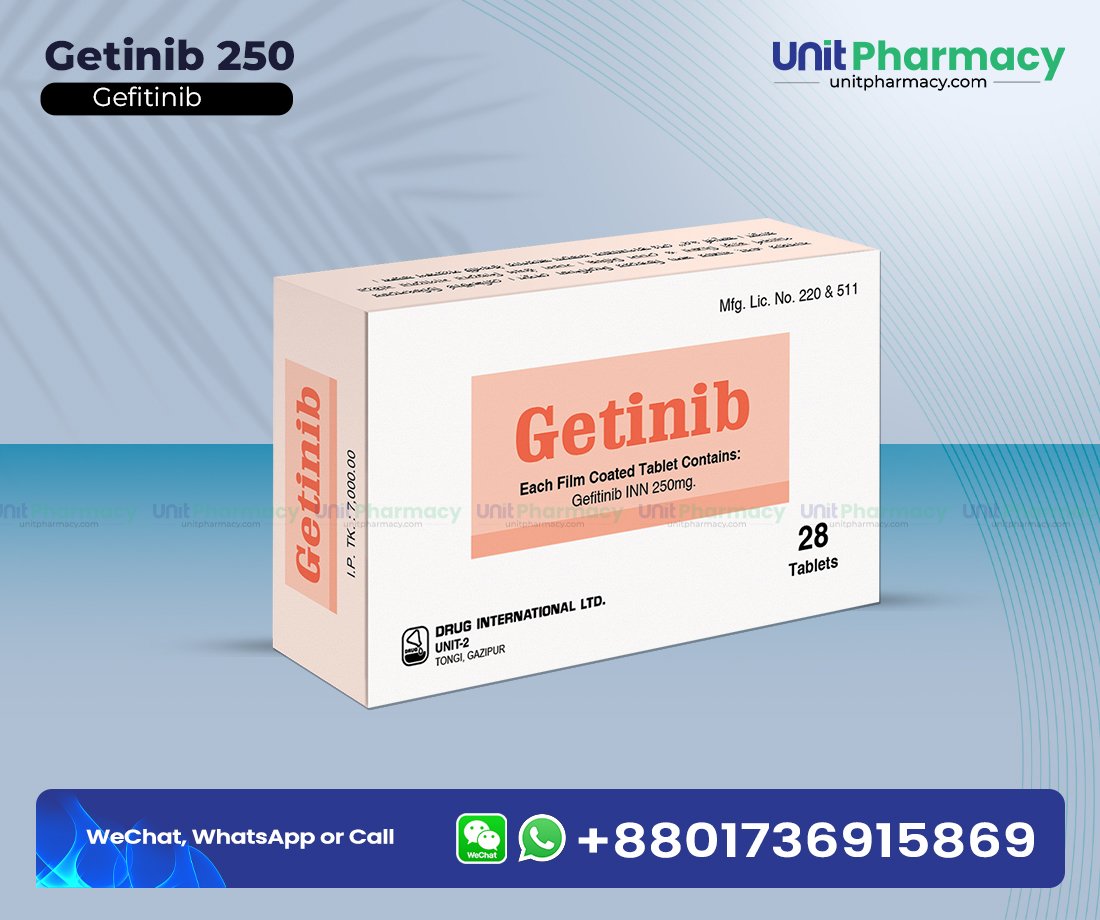
Getinib 250 mg (Gefitinib): Uses, Dosage, Price and More
Summary:
Lung cancer treatment has changed. Targeted medicines like Getinib 250 mg give patients with specific gene changes a clearer path forward than older chemotherapy alone. This page explains Getinib 250 mg in plain language so patients, caregivers, and clinicians can make informed decisions.
What Is Getinib 250 mg?
Getinib 250 mg is a generic version of Gefitinib. Each film-coated tablet contains 250 mg of the active ingredient gefitinib. It comes in a 28-tablet pack. Beacon Pharmaceuticals PLC manufactures it under current Good Manufacturing Practice (cGMP) standards in Bangladesh.
Unit Pharmacy supplies Getinib 250 mg. They ship to Saudi Arabia, the UAE, Qatar, Kuwait, Bahrain, Oman, Jordan, Lebanon, Syria, Yemen, Egypt, Turkey, Australia, and New Zealand. Delivery uses DHL Express or EMS and typically takes 5–20 days with tracking.
A valid prescription is required. Prices can change.Gefitinib belongs to the first generation of epidermal growth factor receptor (EGFR) tyrosine kinase inhibitors. Doctors use it mainly for non-small cell lung cancer (NSCLC) that carries certain EGFR mutations.
Getinib 250 mg at a glance
| Product detail | Information |
| Brand name | Getinib 250 mg |
| Generic name | Gefitinib |
| Strength | 250 mg per tablet |
| Dosage form | Oral tablet |
| Pack size | 28 tablets, subject to pack verification |
| Drug class | Epidermal growth factor receptor (EGFR) tyrosine kinase inhibitor |
| Main use | Certain types of locally advanced or metastatic NSCLC |
| Manufacturer | Drug International Ltd., according to Bangladesh medicine listings |
| Export supplier | Unit Pharmacy |
| Prescription | Required |
| Usual adult dose | 250 mg once daily when prescribed for an approved indication |
| Storage | Follow the exact product label and package insert |
Important: Confirm the manufacturer, registered pack size, batch details and current availability against the physical product and its approved documentation before ordering.
How Gefitinib Works? | Mechanism of Action
Cancer cells with EGFR mutations receive constant “grow and divide” signals. EGFR sits on the cell surface. When it activates, it starts a chain of signals inside the cell that promote growth, survival, and spread. Gefitinib blocks the tyrosine kinase part of EGFR. It competes with ATP at the binding site. This stops the receptor from adding phosphate groups to itself and to downstream proteins. The result is reduced cell proliferation and increased programmed cell death (apoptosis) in tumors that depend on mutated EGFR.
The main activating mutations that respond well are exon 19 deletions and the exon 21 L858R point mutation. Testing the tumor or plasma for these mutations is essential before starting treatment. Gefitinib has limited activity against wild-type EGFR or other mutation types such as T790M (the common resistance mutation).
Who Needs Getinib 250 mg? | Therapeutic Uses and Indications
Getinib 250 mg is indicated for adults with locally advanced or metastatic NSCLC whose tumors have activating EGFR mutations (primarily exon 19 deletions or L858R). It is approved as first-line treatment in many regions when the mutation is confirmed by a validated test. It may also be considered after chemotherapy in selected patients, though current guidelines often prefer later-generation EGFR inhibitors in the first-line setting when available. Doctors choose it based on mutation status, performance status, co-existing conditions, and access to other agents. It is not indicated for children or for NSCLC without EGFR-activating mutations.
What Is Gefitinib Used For?
Gefitinib is used to treat certain forms of locally advanced or metastatic non-small cell lung cancer. It is particularly relevant when laboratory testing identifies specific activating EGFR mutations.
NSCLC is the most common broad category of lung cancer. It includes several subtypes, such as adenocarcinoma and squamous cell carcinoma. Gefitinib is not appropriate for every NSCLC subtype or every patient with lung cancer.
Getinib 250 mg Dosage and Administration
The usual adult dose of gefitinib for an approved indication is 250 mg by mouth once daily. The prescribing oncologist determines whether this dose is appropriate and how long treatment should continue.
Do not start treatment, change the dose or stop the medicine without medical advice.
How should Getinib be taken?
- Take the prescribed dose once daily at approximately the same time.
- Take it with or without food.
- Swallow the tablet according to the product instructions.
- If swallowing is difficult, ask the pharmacist whether the exact product can be dispersed in water and how to prepare it safely.
- Do not crush or alter the tablet unless the product instructions and treating team permit the method.
- Keep the medicine in its original packaging as directed on the label.
- Keep it away from children, excess moisture and unsuitable storage temperatures.
Some gefitinib product instructions allow a tablet to be dispersed in still water when swallowing is difficult. The method must follow the relevant product leaflet. Do not assume that instructions for one manufacturer’s product automatically apply to every brand.
What should you do if you miss a dose?
If 12 hours or more remain until the next dose, take the missed tablet. If less than 12 hours remain, skip it and continue with the next scheduled dose. Never take two tablets at once.
No routine dose adjustment is needed for age, weight, gender, ethnicity, or mild-to-moderate renal impairment.
Caution is advised in severe renal impairment. Liver function is monitored because the drug is metabolized by the liver (mainly CYP3A4).Continue treatment until disease progression or unacceptable toxicity. Your oncology team will decide on interruptions or permanent discontinuation based on side-effect severity.
How long does treatment last?
Treatment may continue while the cancer responds and side effects remain acceptable. There is no single treatment duration that applies to every patient.
The oncologist may recommend stopping or changing treatment if the cancer progresses, severe toxicity develops or another medical issue makes continued use unsuitable.
EGFR mutation-positive non-small cell lung cancer
EGFR is a protein on the surface of cells. It receives signals that can influence cell growth and survival. Certain mutations in the EGFR gene can make this signaling pathway overactive.
Gefitinib may be prescribed when a tumor has an EGFR mutation that is known to respond to the medicine. The US prescribing information specifically identifies metastatic NSCLC with EGFR exon 19 deletions or exon 21 L858R substitution mutations for first-line treatment.
Doctors use molecular testing to determine whether the tumor carries a relevant mutation. Testing may use tumor tissue or, in selected situations, a blood sample that detects tumor-derived DNA.
A cancer diagnosis alone is not enough to establish suitability for gefitinib. The oncologist must consider the test result, disease stage, previous treatment, local treatment guidelines and the patient’s overall condition.
Is gefitinib a chemotherapy medicine?
Gefitinib is an anticancer medicine, but it is classified as targeted therapy rather than conventional cytotoxic chemotherapy.
Traditional chemotherapy generally attacks rapidly dividing cells through mechanisms that are not limited to one molecular target. Gefitinib blocks the EGFR tyrosine kinase signaling pathway. This targeted action can make it an appropriate treatment for cancers with susceptible EGFR mutations.
Targeted therapy can still cause serious adverse effects. Patients need medical supervision, laboratory monitoring and prompt assessment of new symptoms.
Is Getinib suitable for every lung cancer patient?
No. Gefitinib is not a universal lung cancer treatment.
Its use depends on the tumor’s molecular profile and the applicable prescribing indication. Some patients may benefit more from another EGFR inhibitor, immunotherapy, chemotherapy or a combination of treatments.
An oncologist should review the pathology report, molecular testing and treatment history before prescribing Getinib 250 mg.
Drug Class and Comparison with Other EGFR Inhibitors
Gefitinib is a first-generation reversible EGFR tyrosine kinase inhibitor. Other agents in the family include:
| Feature | Gefitinib (1st gen) | Erlotinib (1st gen) | Afatinib (2nd gen) | Osimertinib (3rd gen) |
| Generation | First | First | Second | Third |
| Binding | Reversible | Reversible | Irreversible | Irreversible |
| Covers T790M | No | No | Limited | Yes |
| Brain penetration | Limited | Limited | Moderate | High |
| Typical median PFS (EGFR+) | ~9–10 months | ~9–13 months | ~11 months | ~18–19 months |
| Common side effects | Rash, diarrhea | Rash, diarrhea | Rash, diarrhea, stomatitis | Rash, diarrhea (often milder) |
| Cost / Availability | Generic widely available | Generic available | Branded/generic | Mostly branded, higher cost |
Third-generation agents such as Osimertinib generally show longer progression-free survival and better central-nervous-system control in head-to-head trials (for example FLAURA). First-generation drugs like Getinib 250 mg remain useful when cost, local availability, or specific patient factors favor them. Combination strategies and sequential use continue to be studied.
Getinib versus Gefinix
Getinib and Gefinix contain gefitinib, but they are separate brands associated with different manufacturers in Bangladesh. Brand substitution should be confirmed by a pharmacist and treating clinician, with attention to registration, product quality, pack details and the prescribed medicine.
Gefitinib versus osimertinib
Osimertinib has a different molecular profile and is used in specific EGFR-mutated NSCLC treatment settings. It may be preferred in certain circumstances based on clinical evidence, treatment guidelines and the patient’s mutation profile.
Gefitinib and Osimertinib should not be treated as interchangeable medicines. The best option depends on the clinical situation and current local guidelines.
Getinib 250 mg Side Effects
Gefitinib can cause side effects ranging from mild skin changes to serious reactions that require urgent medical attention. Not every patient experiences the same effects, and the severity can vary.
Common adverse effects include:
- Acne-like skin rash
- Dry, itchy or irritated skin
- Diarrhea
- Nausea or reduced appetite
- Mouth irritation
- Fatigue
- Changes in liver blood tests
Tell the oncology team about new or worsening symptoms. Early management can help prevent some side effects from becoming more serious.
Less common but important risks:
- Interstitial lung disease (ILD): occurs in roughly 1–2% of patients and can be serious. New or worsening shortness of breath, cough, or fever requires immediate medical attention.
- Severe skin reactions (rare).
- Eye problems (dry eyes, conjunctivitis, corneal changes).
- Liver toxicity: regular blood tests are needed.
- Gastrointestinal perforation (rare).
Your doctor will check blood counts, liver function, and kidney function at baseline and during treatment. Report any new respiratory symptoms promptly.
When should you seek emergency help?
Get urgent medical assistance for:
- Severe or sudden difficulty breathing.
- Facial or throat swelling that may indicate a serious allergic reaction.
- Severe abdominal pain or signs of gastrointestinal bleeding.
- Widespread blistering or peeling skin.
- Severe dehydration, fainting or marked weakness.
Do not wait for a routine appointment if symptoms are severe.
Warnings and Precautions Before Taking Getinib 250 mg
Before starting treatment, tell the oncologist about your medical history, current medicines, allergies and any previous reaction to cancer therapy.
Pregnancy and breastfeeding
Getinib 250 mg may cause fetal harm. Tell your doctor if you are pregnant, think you may be pregnant or plan to become pregnant. Discuss effective contraception during treatment and for the period specified in the product information.
Ask the treating team about breastfeeding before starting treatment. Do not assume breastfeeding is safe while taking gefitinib.
Liver disease
People with existing liver problems may require closer monitoring. The treating clinician should review liver function tests and assess symptoms that could indicate liver injury.
Lung disease
Tell your doctor about previous interstitial lung disease, pneumonitis or other significant respiratory conditions. Report any new breathing symptoms during treatment, even if you already have a chronic cough or another lung condition.
Severe gastrointestinal symptoms
Severe abdominal pain, blood in the stool or black stools can indicate a serious gastrointestinal problem. These symptoms need urgent medical assessment.
Allergies and previous treatment reactions
Tell your clinician about allergies to gefitinib or any ingredient in the product. Also explain any severe reaction to a previous EGFR inhibitor.
Who should not take Getinib 250 mg?
Getinib 250 mg should only be used when prescribed for an appropriate indication. A known allergy to the active ingredient or a product component requires clinical review.
The current US label does not list a formal absolute contraindication, but that does not mean the medicine is suitable for everyone. Individual risks, pregnancy considerations, interactions and the local product label must guide treatment.
Monitoring During Gefitinib Treatment
Regular follow-up helps the oncology team assess whether treatment is working and whether it remains safe.
What may the doctor monitor?
Liver function: Blood tests can detect changes in liver enzymes and bilirubin.
Cancer response: Imaging, symptom review and other appropriate assessments help determine whether the tumor is responding or progressing.
Respiratory symptoms: New cough, breathlessness or fever may require prompt evaluation for lung toxicity, infection or another cause.
Skin and gastrointestinal symptoms: Rash, diarrhea and reduced fluid intake may require supportive treatment or dose interruption.
Other medicines: Medication reviews can identify interactions that affect gefitinib exposure or safety.
The monitoring schedule depends on the patient’s condition and the treating team’s protocol. Patients should attend appointments even when they feel well.
Can patients switch from another EGFR inhibitor to Getinib 250 mg?
Do not switch medicines without the oncologist’s direction. Cancer progression can result from different resistance mechanisms, and a drug that worked previously may no longer control the disease.
The oncology team may recommend repeat molecular testing, imaging or another treatment strategy before deciding on the next medicine.
Pricing, Availability, and How to Order Getinib 250 mg
Generic Getinib 250 mg offers a lower-cost alternative to branded Iressa in many markets. Exact pricing varies by supplier, currency, and shipping destination. Unit Pharmacy lists current prices on their sites; prices are subject to change.
Insurance coverage differs by country and plan. Some patients use patient-assistance programs or import pathways under local regulations.
Always confirm that the product is genuine and that your prescription meets the legal requirements of both the exporting and importing countries.
To order: Obtain a valid prescription from your oncologist. Submit it through the Unit Pharmacy website or contact channel. Confirm shipping address (especially for Gulf Cooperation Council countries, Australia, or New Zealand) and choose tracked express delivery. Expect 5–20 days transit time depending on the service and destination.
Caveat: Store tablets below 30 °C in the original packaging, protected from moisture and light, and out of reach of children.
Patient Experiences and Practical Considerations
Patients often report that the once-daily oral schedule is convenient compared with intravenous chemotherapy. Many notice improvement in cough or breathing within a few weeks when the drug is working. Skin and bowel side effects are the most frequent practical challenges; proactive management with the oncology team usually keeps them mild.
Access to mutation testing remains the critical first step. Without confirmed EGFR exon 19 deletion or L858R, benefit is unlikely. Regular imaging and laboratory monitoring help detect progression or toxicity early so that treatment can be adjusted or changed to a later-generation agent if needed.
Conclusion
Getinib 250 mg (gefitinib) is a well-established targeted therapy for adults with EGFR-mutation-positive advanced non-small cell lung cancer. It offers an oral, once-daily option backed by large clinical trials and years of real-world use. When the correct mutation is present, many patients experience meaningful tumor control and symptom relief. Talk with your oncologist about mutation testing, whether Getinib 250 mg fits your treatment plan, and how to manage possible side effects.
If you have a prescription and live in one of the listed shipping countries, Unit Pharmacy can supply the 28-tablet pack with tracked international delivery. Always use medicines under medical supervision. This information supports but does not replace advice from your healthcare team. For the most current prescribing details, refer to the official product information and your treating physician.
Frequently Asked Questions
1. Is Getinib 250 mg the same as Iressa?
Ans: Yes. Getinib contains the same active ingredient, gefitinib 250 mg. Regulatory standards require generics to demonstrate equivalent quality and bioavailability.
2. How long can I stay on Getinib 250 mg?
Ans: As long as the cancer remains controlled and side effects stay manageable. Some patients continue for many months or longer. Your doctor decides when to stop or switch based on scans and clinical status.
3. Do I need genetic testing before starting?
Ans: Yes. Treatment should only begin after a validated test confirms an activating EGFR mutation (mainly exon 19 deletion or L858R). Testing can be done on tumor tissue or circulating tumor DNA in plasma.
4. Can I take Getinib 250 mg with food or other medicines?
Ans: You may take it with or without food. Avoid antacids close to the dose and discuss all other medicines with your doctor because of potential interactions.
5. What happens if the cancer stops responding?
Ans: Resistance often develops, commonly through the T790M mutation. Your doctor may order new testing and consider switching to a third-generation EGFR inhibitor such as osimertinib or other available options.
Medical Disclaimer
This page provides general information about Getinib 250 mg and gefitinib. It is not a substitute for the approved product leaflet, a prescription, or advice from an oncologist or pharmacist.
Gefitinib can cause serious and potentially life-threatening adverse reactions.
Use it only under appropriate medical supervision. Treatment decisions must reflect the patient’s diagnosis, molecular test results, clinical condition and local prescribing guidance.
Product availability, manufacturer information, prices, shipping services and import requirements must be verified before publication or purchase.



Reviews
There are no reviews yet.