
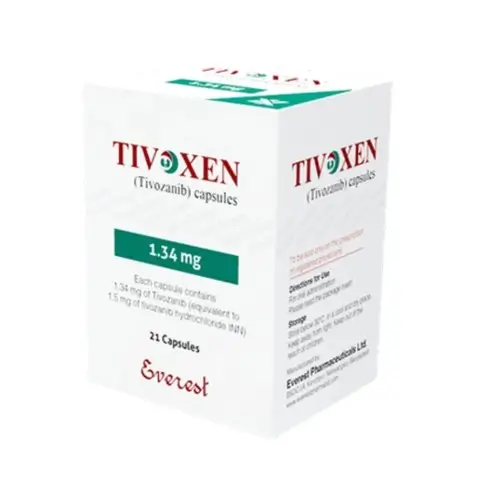
Tivoxen 1.34 MG (Tivozanib) – Targeted Therapy for Advanced Kidney Cancer
Tivoxen 1.34 MG , which contains the pharmacologically active substance tivozanib, is an anticancer drug that can be administered orally in the form of capsules. It is a generic version of the original drug Fotivda. Tivoxen acts by inhibiting Tyrosine Kinases and is among the class of cancer drugs that are designed to interfere with cancer cell signaling pathways.
This treatment is mainly indicated for patients with very advanced cancers, in particular, kidney cancer patients whose cancers have continued to grow even after they have received other treatments. The drug targets-specific signaling pathways and Because of this the use of Tivoxen 1.34 MG is restricted to patients under the care and guidance of oncologists specialized in cancer therapies.
Primary Uses of Tivoxen 1.34 MG
Tivoxen 1.34 MG is mainly indicated for the treatment of:
Advanced Renal Cell Carcinoma (RCC)
Renal Cell Carcinoma is the major subtype of kidney cancer found in adults. If not treated early, it can spread beyond the kidney tissues which make treatment options limited.
Tivoxen prevents progression of cancer, reduces cancer cell proliferation, and thereby leads to enhanced control of disease in patients with advanced RCC.
Recurrent or Treatment-resistant Kidney Cancer
This drug is mainly given to cancer patients who have:
- Had their cancer come back after being treated once (relapsed), or
- Did not respond to the usual standard treatments (refractory)
People are mostly given this drug after they had done at least two systemic treatment regimens which included immunotherapy or other targeted therapies.
How Tivoxen 1.34 MG Works
The active ingredient is tivozanib, a potent and highly selective inhibitor of the Vascular Endothelial Growth Factor Receptors (VEGFR-1, VEGFR-2, and VEGFR-3).
These receptors regulate angiogenesis, which is the formation of new blood vessels. Since blood vessels provide oxygen and nutrients, tumors use this to their advantage by growing and spreading.
Tivoxen, which blocks these receptors, acts in several major ways:
- First, it prevents the development of new blood vessels that would be nourishing the tumor.
- Second, it decreases the availability of oxygen and nutrients to the cancer cells.
- Third, it helps to slow down the tumor growth and progression of the disease.
- Finally, it supports the control of cancer spread even in later stages.
Thanks to its targeted approach, Tivoxen is able to zero in on cancer-related pathways and reduce the wide-ranging side effects linked to conventional chemotherapy.
Dosage and Administration
The treatment plan for Tivoxen 1.34 MG is given in a step-by-step manner and needs to be strictly borne out by the patient after a thorough consultation with the oncologist.
Typical Therapy Plan:
- Drug intake: 1 pill (1. 34 MG) daily
- Length: 21 days running without break
- Withdrawal: 7 days without medicine
- Overall duration: 28 days
The patient’s feedback and medical examination decides whether to proceed with this treatment or not.
Essentials for Giving the Drug:
- Take drug as whole capsule and drink water.
- Do not depend on food to take the drug.
- Capsules should not be broken, crushed, or chewed.
- For optimum effects, try to take the drug at the same time daily.
What To Do If Dose Is Forgotten:
If a dose is skipped, take the next scheduled dose on time. Do not double up to make up for the missed dose.
Side Effects and Safety Considerations
Similar to a lot of targeted cancer therapies, blood vessels and cellular signaling pathways disruption by Tivoxen 1.34 MG can be one of the reasons it produces side effects in the patients.
Following are the common side effects reported by the patients:
- Hypertension (high blood pressure)
- Feeling of tiredness and lack of energy
- Loose or watery stools
- Feeling sick with/without throwing up
- Less desire to eat
- Sore or irritated mouth
Serious side effects (need hospitalization):
- Extreme or non-responsive hypertension
- Continuous throwing up or diarrhea
- Symptoms of less water in the body
- Unusual bleeding or clotting
Physicians might reduce the dose/change the administration schedule to make the therapy more tolerable in case of severe side effects.
Monitoring During Treatment
It is essential for patients who take Tivoxen 1.34 MG to undergo continuous medical supervision for safety and effectiveness. This supervision could involve:
- Checking blood pressure (very important as hypertensive crisis is a serious side effect)
- Performing standard blood tests
- Monitoring the function of the kidneys and liver
- Broad evaluation of the therapeutic effect
Identifying the side effects in pilot phase gives a chance to change the dosage and secure the safety of the drug after long-term use.
Important Safety Instructions
Before starting the treatment with Tivoxen 1. 34 MG, patients should tell their doctor about:
- Heart or blood pressure problems
- Liver or kidney failures
- Medications being taken
- Cancer treatments that were done
This drug must not be taken if the patient is not supervised by a qualified oncologist.
Women who are pregnant or breast feeding should not go for this therapy unless a specialist has given a clear indication because of the potential risk to the fetus or infant.
Why Tivoxen 1.34 MG is Important in Cancer Therapy
Tivoxen 1.34 MG is a very modern cancer treatment through targeted therapy. It focuses on blocking the specific molecular pathways your tumor depends on for growth whereas traditional chemotherapy attacks all rapidly dividing cells, including both cancer and normal cells.
Some of the main benefits are:
- Targeted Killing of Cancer Cells through Starvation
- Slowing down the progression of cancer in patients with locally advanced or metastatic renal cell carcinoma.
- It is a pill and quite simpler to use than the intravenous therapy.
- It is effective even for patients who have already tried all other lines of therapies.
Because of this, it really helps in the treatment of advanced renal cell carcinoma.
Conclusion
Tivoxen 1.34 MG (Tivozanib) is a form of targeted oral therapy that is More exactly designed for treating kidney cancer that has spread and is resistant to prior treatments. It works by inhibiting receptors for VEGF, which leads to cutting off the tumor’s blood supply and Because of this halting the cancer’s progression.
Although it is a major advancement for cancer patients, it also comes with certain side effects that Mainly include elevated blood pressure and issues with the digestive system; That means, use of this drug takes good clinical judgment and close patient monitoring.
Taking medication as directed by an oncologist is key for a patient; and with this, regular medical check-ups help in achieving the desired and safe therapeutic results.
Reviews
There are no reviews yet.